
Czechs love Dvořák. Classical music: a strong tradition and new audiences
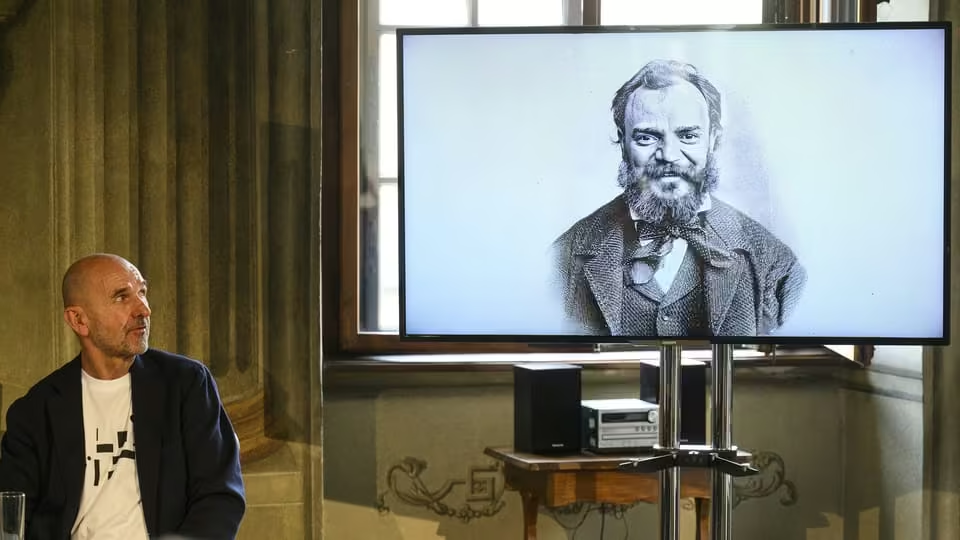
Classical music bears a strong tradition in the Czech Republic and is symbolised by Antonín Dvořák. According to a recent survey that we commissioned from the agency Ipsos in March 2026, 98% of Czechs are familiar with Dvořák. His music is one of the most distinctive pillars of Czech culture.
His most well-known work is Rusalka (64%), followed by the “From the New World” Symphony (16%) and the opera The Devil and Kate (11%).
“The degree to which Dvořák’s music is anchored in the Czech Republic is exceptional. Many people don’t realise that Dvořák is the most-listened to Czech musician in the world. He has about 2.6 million streams per month on Spotify. That makes our commitment to show that his music can still be vibrant and current even more relevant,” said Robert Kolář, Director of the Academy of Classical Music, which organises the Dvořák Prague Festival.
82% of Czechs consider classical music an important part of culture and more than 70% support its continued development. Opinions from different generations are also interesting. The audiences that listen to classical music most often are the youngest and oldest age groups, which shows that it has the power to appeal to both new and traditional listeners.
“The survey shows that having a bond to classical music isn’t a matter of interest – it’s more about access. Almost 70% of the respondents consider music education to be an important part of education and children’s development,” explained Robert Kolář.
Approximately one-third of the Czech population is familiar with the Dvořák Prague Festival and about 30% would consider attending a Festival concert.
“Accessibility – both financial and geographic – plays a key role. The data show that people in larger cities come into contact with classical music more often. In outlying regions, people often don’t have access to a wide array of concerts. The issue is not that people aren’t interested in classical music, but how to make access to it easier and natural for people,” concluded Robert Kolář.
In response, in addition to traditional concerts, the Festival has long developed new formats that introduce classical music to new audiences.
Read more in this Czech Radio article.