
petra-hajska-052026-1.avif)
Date
11/9/2024
Time
8.15 pm
Doors Closed
8 pm
End of Concert
9.40 pm
Dress Code
casual
Programme Series

Programme
Gustav Mahler
Artists
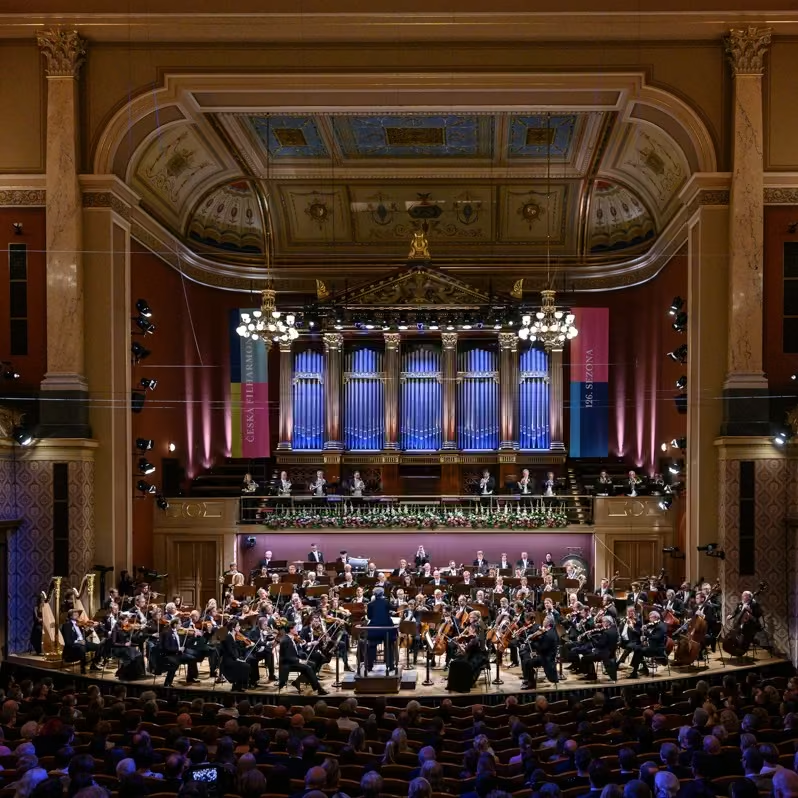
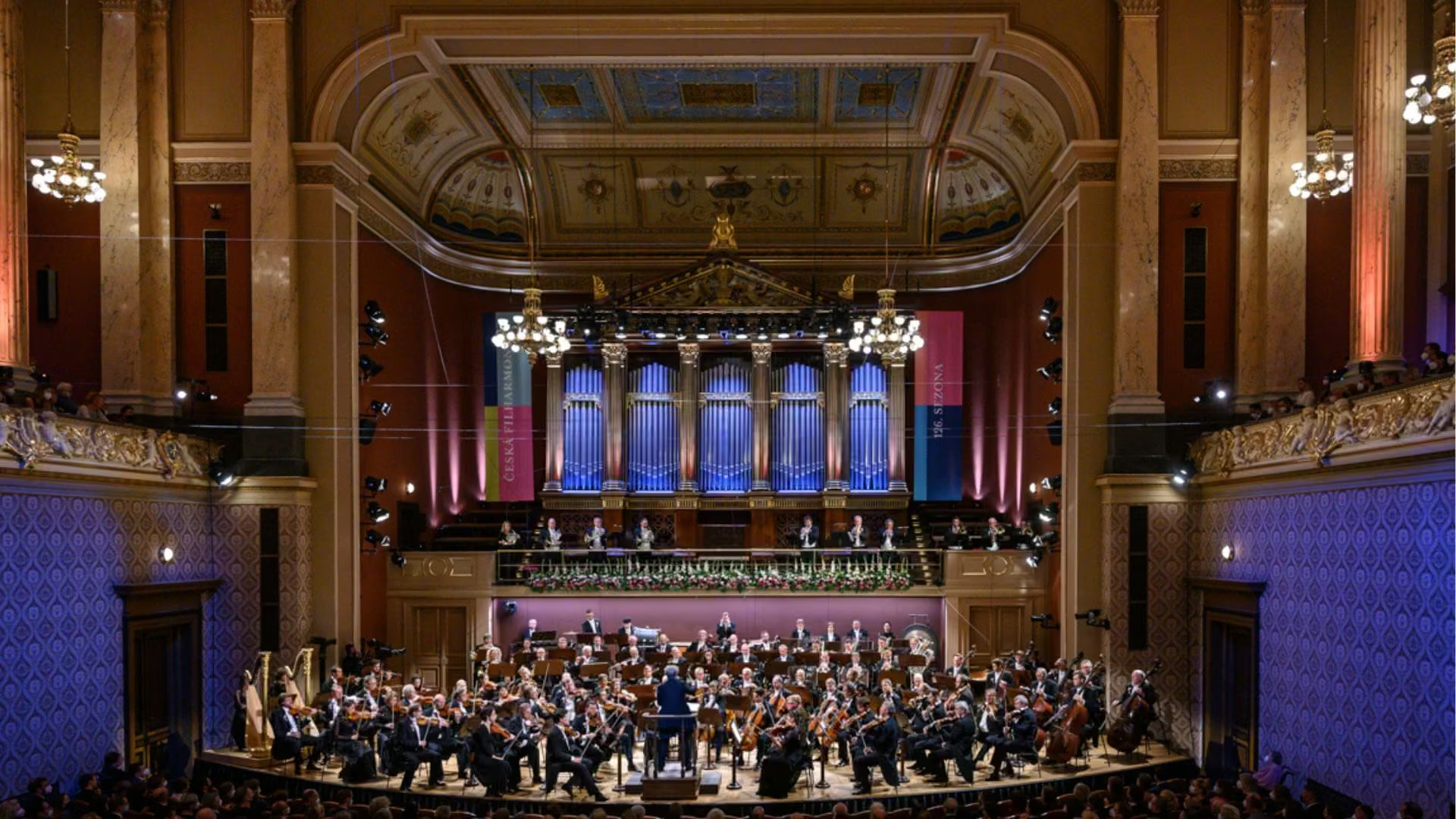
Named Gramophone’s Orchestra of the Year in 2024, the Czech Philharmonic is recognised as one of the world’s leading orchestras and remains the Czech Republic’s key cultural ambassador. Now in its 131st season, the orchestra combines a deep-rooted musical tradition with an international artistic outlook, expanding its profile through tours, residencies and recordings.
During the 2024 Year of Czech Music, the Czech Philharmonic and its Chief Conductor and Music Director Semyon Bychkov gave a three-day residency at New York’s Carnegie Hall. That same year saw the release of their recording of Smetana’s Má vlast (My Country), which went onto win the 2025 BBC Music Magazine Orchestral Award. In addition to Czech music, the orchestra’s long-standing relationship with composers such as Brahms, Tchaikovsky and Mahler has resulted in a series of benchmark recordings, including The Tchaikovsky Project (2019) and the first new cycle of Mahler symphonies in more than 40 years, released in 2026. The next release with Bychkov features Shostakovich’s Symphony Nos. 5 and 7.
The 131st season opens in Prague with Shostakovich’s Violin Concerto No. 1 featuring Artist-in-Residence Janine Jansen, alongside Dvořák’s Symphony No. 7. Touring highlights include the orchestra’s first visit in over 50 years to Sweden and Finland, a return to Lucerne Festival, and residencies in London, Vienna and Hamburg. At home, the Czech Philharmonic performs at the Rudolfinum in Prague and at leading Czech festivals including Dvořák Prague, Prague Spring, Smetana Litomyšl, and for the first time, Janáček Brno.
Repertoire this season with Bychkov includes Má vlast; works by Mussorgsky, Ravel, Adams, Strauss, Glanert and Britten; and a major focus on Rachmaninoff, presented both in Prague and on tour. Beethoven’s Ninth Symphony, performed with the Prague Philharmonic Choir, will mark the 200th anniversary of the composer’s death in 2027.
Principal Guest Conductors Simon Rattle and Jakub Hrůša both return this season. With Rattle, the orchestra presents music by Barber, Shostakovich, Debussy, Szymanowski and the Czech premiere of Composer-in-Residence Thomas Adès’s Aquifer. With Hrůša – appointed last year as the orchestra’s next Chief Conductor and Music Director (Renáta Kellnerová Chair) from the 2028/2029 season – they perform works by Strauss, Beethoven, Suk and a world premiere by Martin Smolka.
Guest conductors this season include Vasily Petrenko, Herbert Blomstedt, Elim Chan, Maxim Emilyanchev, and Daniel Harding, who closes the subscription season with the Accademia Nazionale di Santa Cecilia. Guest soloists include Yuja Wang, Behzod Abduraimov, Mao Fujita, Yunchan Lim, Seong-Jin Cho, Karen Gomyo, Radek Baborák and Kirill Gerstein.
The Czech Philharmonic’s distinguished history reflects the Czech Republic’s complex political past and its central European location. An early champion of the music of Martinů and Janáček, the Czech Philharmonic gave its first concert in 1896 with an all-Dvořák programme conducted by the composer itself.
Alongside its commitment to championing Czech composers, the orchestra’s belief in the power of music to transform lives remains a defining principle. The Czech Philharmonic Youth Orchestra, Orchestral Academy, and Jiří Bělohlávek Prize for young musicians, form part of the orchestra’s education strategy which engages with more than 400 schools. An inspirational music and song programme led by Ida Kelarová continues to support social inclusion by giving voice to Romany communities through music.
source: Česká filharmonie
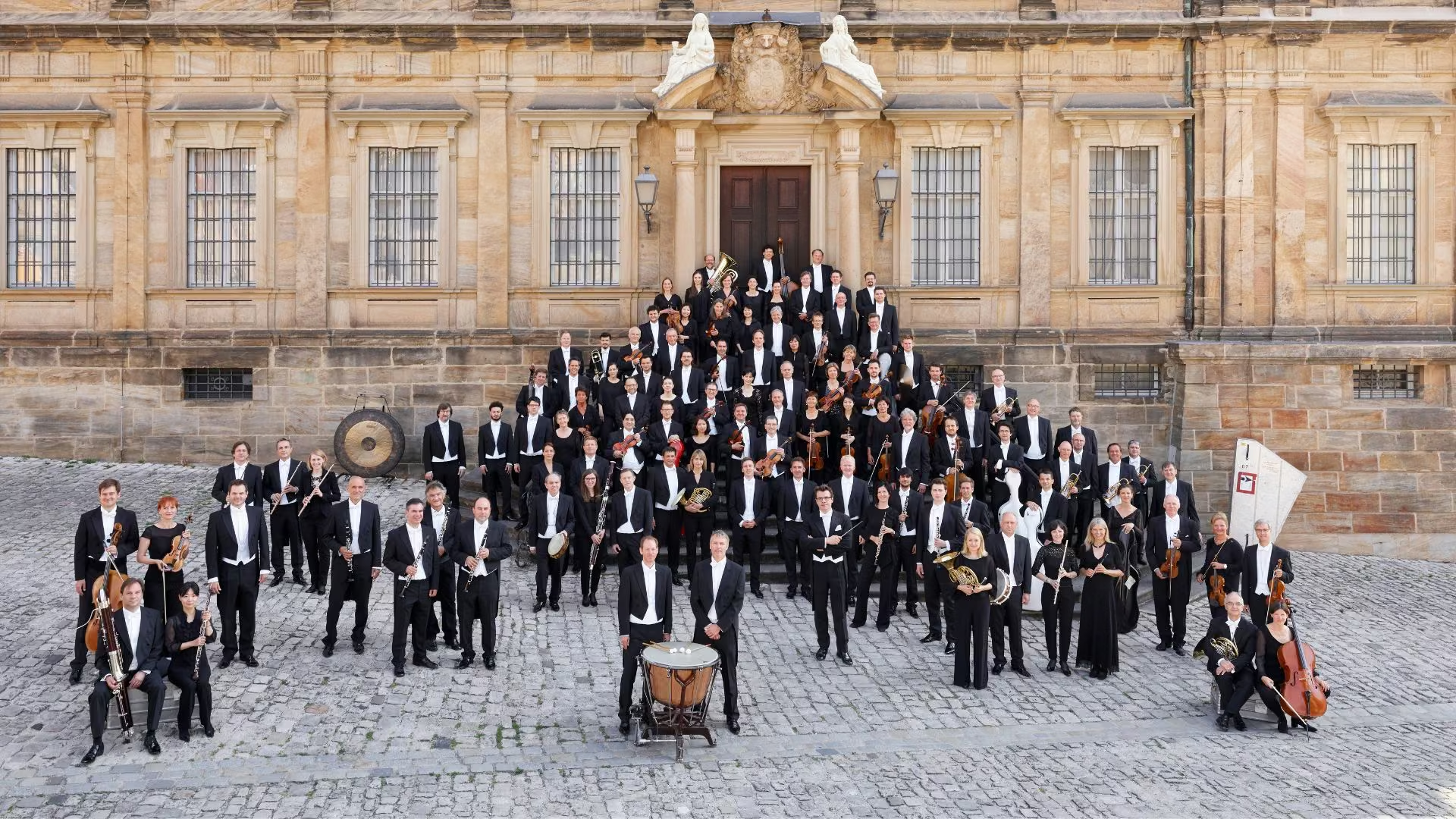
The Bamberg Symphony is the only orchestra of world renown that is not based in a vibrant metropolis. Almost 10% of the local population subscribe to one of the orchestra’s five concert series, in many cases for decades. However, the ‘magnetic effect’ of the orchestra resonates far and wide: the traveling orchestra has been performing its characteristically dark, sombre, and warm sounds and the musical echo of its hometown throughout the world since 1946. With almost 7,500 concerts in over 500 cities and 63 countries, they have become a cultural ambassador for Bavaria and all of Germany. They regularly tour the USA, South America, Japan, and China, for example, and are invited by renowned concert halls and festivals worldwide. The Bamberg Symphony therefore briefly describes their mission as Resonating Worldwide.
The circumstances of its founding make the Bamberg Symphony a mirror of German history: in 1946, former members of the German Philharmonic Orchestra Prague met colleagues in Bamberg who also had to flee their homeland as a result of the war and post-war turmoil. Starting with the orchestra in Prague, its lines of tradition can be traced back to the 18th and 19th centuries. Thus, the roots of the Bamberg Symphony reach back to Mahler and Mozart. Since 2004, the orchestra has held the honorary title of Bavarian State Philharmonic Orchestra, and is substantially financed by the Free State of Bavaria.
Four principal conductors, Joseph Keilberth, James Loughran, Horst Stein, and Jonathan Nott, as well as Artistic Director Eugen Jochum have led the orchestra since 1946. With Czech Jakub Hrůša, the fifth principal conductor since 2016, a bridge has again been built between the historical roots of the Bamberg Symphony and the present day, more than 75 years after the orchestra was founded. They regularly perform with their honorary conductors Herbert Blomstedt and Christoph Eschenbach, as well as with other leading conductors such as Manfred Honeck, Andris Nelsons and Lahav Shani.
A not insignificant contribution to increasing the worldwide high profile of the Bamberg Symphony is also attributed to the countless concert broadcasts in cooperation with Bavarian Radio (BR) as well as various other radio, record, and CD productions. In 2019, the orchestra broke new ground with a recording of Smetana's »Má vlast« using the direct-to-disc process, in which the recording is made directly onto a disc without digital post-processing, creating a unique sound experience. The recording of Mahler’s 4th Symphony (2020; accentus music) was awarded the Annual Prize of the German Record Critics at the end of 2021. This was followed by a recording of Anton Bruckner’s 4th Symphony in all three versions, united in one edition – a unique project to date, which won the International Classical Music Award 2022. Subsequently, the orchestra also received the ICMA 2023 for its recording of Hans Rott’s 1st Symphony (2022; Deutsche Grammophon). The Bamberg Symphony completed a cycle of four double CDs with symphonies by Brahms and Dvořák (2018-2022; TUDOR). In November 2022, two of these CDs were awarded »Recording of the Month« by BBC Music Magazine.
The fact that this group also places a great deal of emphasis on programmatic content at their concerts is attested to by the award from the German Music Publishers Association for »The Best Concert Programme« in spring 2018. In 2020, the orchestra received the Bavarian State Prize for Music. In 2021, an audio book was published (accentus music) that musically retells the unique history of the Bamberg Symphony from Mozart in Prague to the present day.
Since 2022, the Bamberg Symphony has set itself the goal of acting and travelling in a more climate-friendly manner, e.g., using means of transportation powered by alternative energy sources. For larger tours and trips abroad, efforts are being made to optimize travel routes and tour procedures. Increasingly, the orchestra stays in one country or place for longer periods, e.g., to play residencies or lead educational projects joined by local artists. By financially supporting environmental projects, including those in concert locations, the orchestra is attempting to offset most of the CO2 emissions caused by its own travels.
source: Bamberger Symphoniker
photo © Andreas Herzau
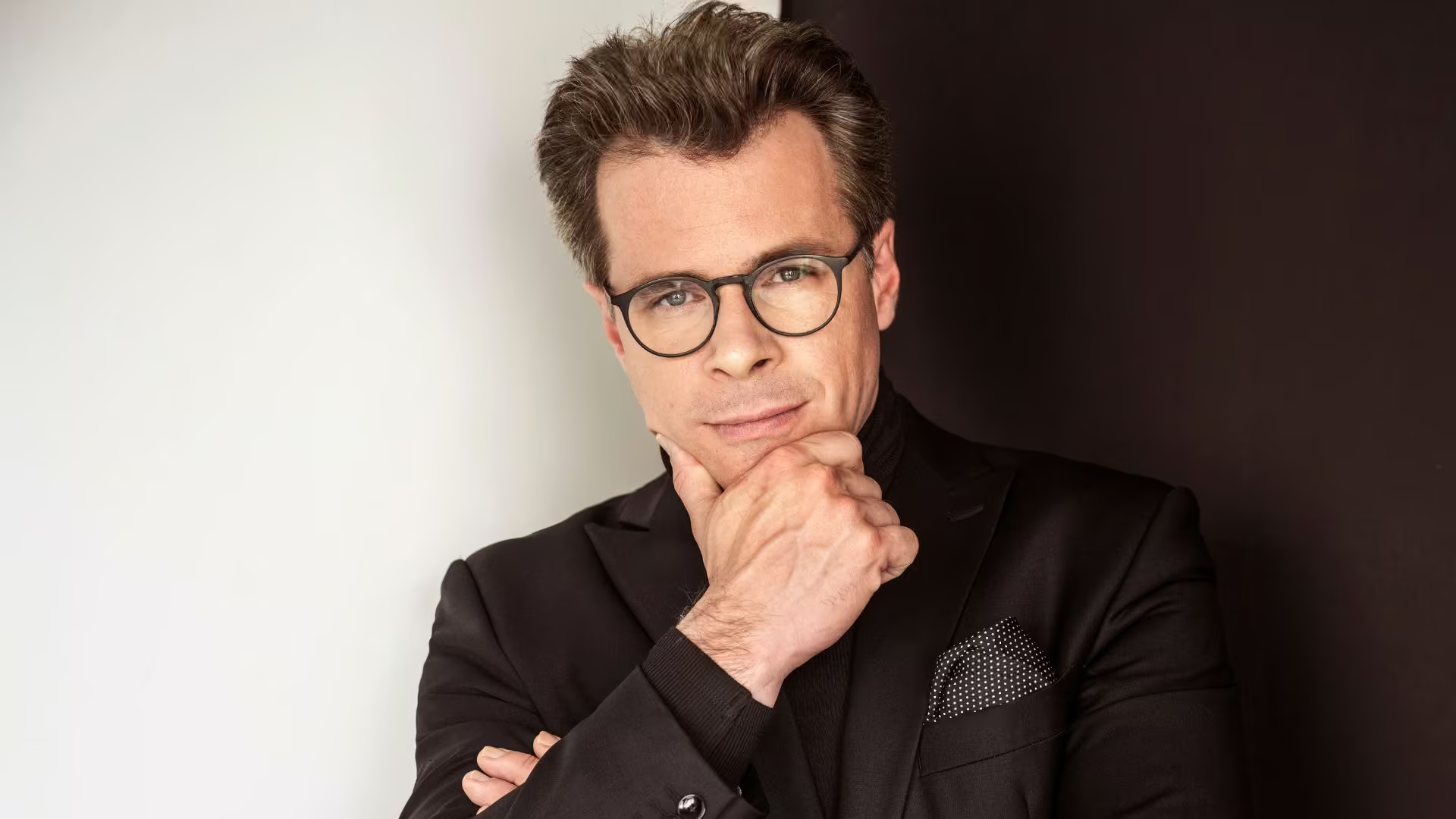
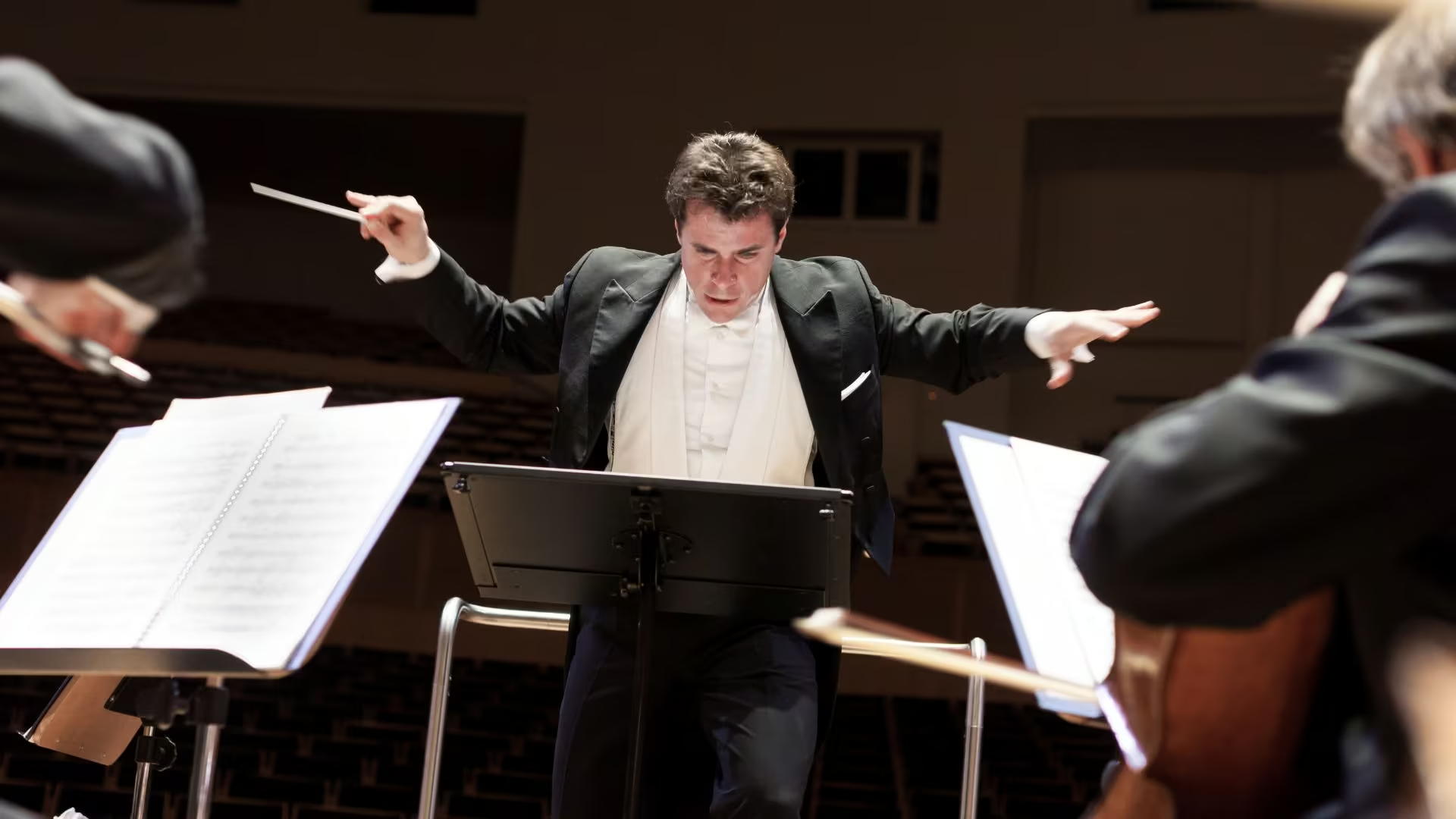
Internationally acclaimed Czech conductor Jakub Hrůša is Chief Conductor of the Bamberg Symphony, Music Director of The Royal Opera, Covent Garden (from 2025), and Chief Conductor and Music Director Designate of the Czech Philharmonic (from 2028).
He is a frequent guest with many of the world’s greatest orchestras, enjoying close relationships and performing regularly with the Vienna Philharmonic, Berlin Philharmonic, Bavarian Radio Symphony, Munich Philharmonic, Leipzig Gewandhaus Orchestra, Staatskapelle Dresden, Tonhalle Orchester Zürich, Lucerne Festival Orchestra, Royal Concertgebouw Orchestra, Orchestre de Paris, Orchestre Philharmonique de Radio France, NHK Symphony and the Mahler Chamber Orchestra – and in the US with The Cleveland Orchestra, New York Philharmonic, Chicago Symphony Orchestra, and Boston Symphony Orchestra.
As a conductor of opera, he has led productions for the Lyric Opera of Chicago (Jenůfa), Salzburg Festival (Kát’a Kabanová with the Vienna Philharmonic), Vienna State Opera (The Makropulos Case), Royal Opera House, Covent Garden (Carmen and Lohengrin), Opéra National de Paris (Rusalka), and Zurich Opera (The Makropulos Case). He has also been a regular guest with Glyndebourne Festival, conducting Vanessa, The Cunning Little Vixen, A Midsummer Night’s Dream, Carmen, The Turn of the Screw, Don Giovanni and La bohème, and served as Music Director of Glyndebourne On Tour for three years.
His relationships with leading vocal and instrumental soloists have included collaborations in recent seasons with Behzod Abduraimov, Piotr Anderszewski, Leif Ove Andsnes, Emanuel Ax, Lisa Batiashvili, Joshua Bell, Yefim Bronfman, Rudolf Buchbinder, Renaud Capuçon, Gautier Capuçon, Isabelle Faust, Bernarda Fink, Julia Fischer, Sol Gabetta, Véronique Gens, Christian Gerhaher, Kirill Gerstein, Karen Gomyo, Hélène Grimaud, Augustin Hadelich, Hilary Hahn, Barbara Hannigan, Alina Ibragimova, Steven Isserlis, Janine Jansen, Sheku Kanneh-Mason, Leonidas Kavakos, Evgeny Kissin, Patricia Kopatchinskaja, Lang Lang, Igor Levit, Karita Mattila, Albrecht Mayer, Anne-Sophie Mutter, Stephanie d’Oustrac, Emmanuel Pahud, Beatrice Rana, Kian Soltani, Josef Špaček, Nikolaj Szeps-Znaider, Antoine Tamestit, Jean-Yves Thibaudet, Daniil Trifonov, Mitsuko Uchida, Klaus Florian Vogt, Lukáš Vondráček, Yuja Wang, Alisa Weilerstein, and Frank Peter Zimmermann.
As a recording artist, Jakub Hrusa has received numerous awards and nominations. He was a double winner at the 2024 Gramophone Awards in both the Concerto and Opera categories, for his recordings of Britten’s Violin Concerto with Isabelle Faust and Bavarian Radio Symphony Orchestra, and Kát’a Kabanová with the Vienna Philharmonic at Salzburg Festival. With Bamberg Symphony, he received the ICMA Prize for Symphonic Music in both 2022 and 2023, for his recordings of Rott’s Symphony No. 1 and Bruckner’s Symphony No. 4. He was also the 2023 Opus Klassik Conductor of the Year. He was awarded the Preis der Deutschen Schallplattenkritik for his recording of Mahler’s Symphony No. 4, and in 2021 his recording of Martinů and Bartók violin concertos with Frank Peter Zimmermann was nominated for BBC Music Magazine and Gramophone awards, and his disc of the Dvořák Violin Concerto with the Bavarian Radio Symphony and Augustin Hadelich was nominated for a Grammy ® Award. His recordings of Dvořák and Martinů Piano Concertos with Ivo Kahánek and the Bamberg Symphony (Supraphon), and Vanessa from Glyndebourne (Opus Arte) both won BBC Music Magazine Awards in 2020. Other recent releases include Strauss songs with Bamberg Symphony and Kateřina Kněžíková (Supraphon), Dvořák and Brahms Symphonies with Bamberg Symphony (Tudor), Suk’s Asrael Symphony with the Bavarian Radio Symphony (BR Klassik), and Dvořák’s Requiem and Te Deum with the Czech Philharmonic (Decca).
Jakub Hrůša studied conducting at the Academy of Performing Arts in Prague, where his teachers included Jiří Bělohlávek. He is an Honorary Member of the Royal Academy of Music in London, and in 2024 received the Silver Medal of the President of the Czech Senate, its highest award. He was the inaugural recipient of the Sir Charles Mackerras Prize, and has also been awarded the Bavarian Culture Prize, the Czech Academy of Classical Music’s Antonín Dvořák Prize, and – together with Bamberg Symphony – the Bavarian State Prize for Music.
source: Jakub Hrůša
photo © Lenka Hatasová
photo © Andreas Herzau
About the Programme
This concert aims to recreate the 1908 premiere of Gustav Mahler’s Symphony No. 7. Although few structures from the Jubilee Exhibition remain today, the power of the music still lingers. It was here on the site of the Prague exhibition grounds that the successful premiere took place, performed under the baton of the composer himself by the combined orchestras of the Czech Philharmonic and the New German Theatre Orchestra of Prague. Following the post-war expulsion from Czechoslovakia, it was its former members who established the foundations of what is now known as the Bamberger Symphoniker in Bavaria.
The Jubilee Exhibition of the Trade and Business Chamber was an event that engrossed the Czech public and media from May to October of that year. The spectacular event showcased the Czech lands as the industrial heart of the Austrian Empire, bringing Czech culture to the fore. Alongside, the exhibition presented a fully constructed African village, inhabited by Indigenous people, and featured a slide that brought considerable amusement to the contemporary humour magazines. All that is gone. Nevertheless, the union of the Czech and German orchestras under the cosmopolitan Mahler’s conductorship reminds us that Prague can make a legitimate claim to the title of “the Heart of Europe”. Today, the Czech Philharmonic, the Bamberger Symphoniker, conductor Jakub Hrůša along with Mahler's Seventh rightfully take their place at the original premiere site for the upcoming open-air concert. They are also part of the Year of Czech Music in its broader sense, converging at this cultural hub in the heart of a united Europe.

With thanks to all who supported this concert

The Prague Exhibition Grounds (Výstaviště Praha) in Holešovice
The Prague Exhibition Grounds (Výstaviště Praha), located in Prague 7, is a historic leisure complex. This area was created by separating a section of the Royal Game Park during the Jubilee Exhibition in 1891 to celebrate the 100th anniversary of the first Industrial Exhibition of 1791. It was here that prefabricated iron architecture was used for the first time in the Czech lands. The palace was completed in ten months in 1891 despite the exhibition grounds being affected by floods and severe frosts at the time. The building is an important artistic and technical monument and is used for exhibitions, festivals, and other cultural and entertainment events. Since February 2022, the site has been undergoing renovation and reconstruction work on part of the complex that had previously burnt down.